
Blog Post 13: Mendelssohn’s Adagio-Allegro
A New arrangement of Felix Mendelssohn’s “Adagio-Allegro” from Streichersinfonie nr. 8 - for Clarinet Quartet
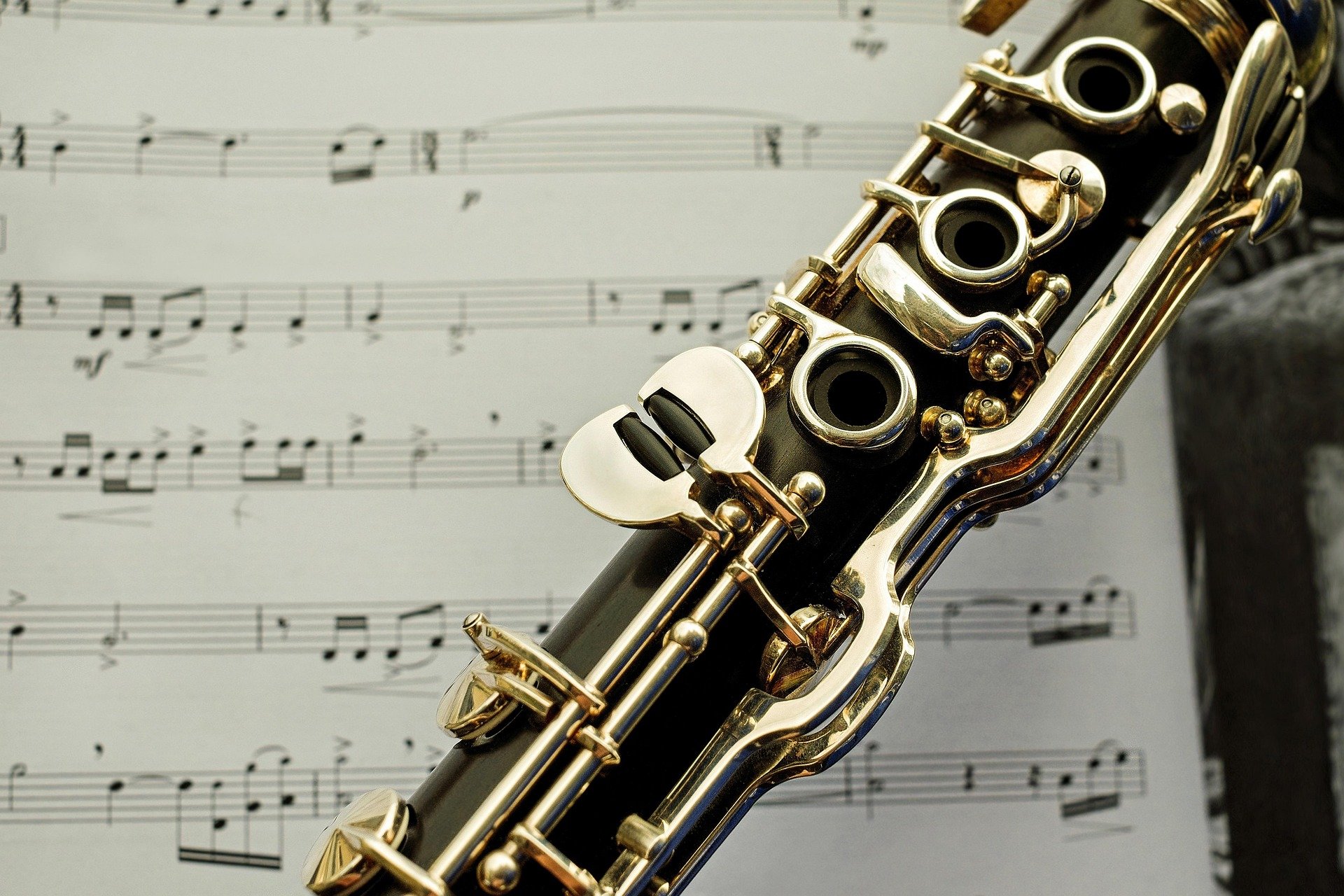
Öhler system klarinette, (German) with sheet music
Thanks for stopping by, and welcome to my blog! I hope you had a great week. Where can I purchase digital sheet music for clarinet quartets online? Craig Music Publishers! In this blog post, I will be discussing my inspiration for writing a new clarinet quartet arrangement of the first movement “Adagio-Allegro” from German composer Felix Mendelssohn’s Streichersinfonie Nr. 8. Although Mendelssohn wrote this piece at only age 13, it already demonstrates his unique compositional style, blending Baroque and Classical influences. But why the picture of the German clarinet above? First, I am a clarinetist and have always admired the Ohler system; second, it is a nod to Mendelssohn’s German heritage and the type of clarinet for which he undoubtedly wrote. Now, what is your experience with Mendelssohn? And what is your favorite Mendelssohn composition? Are you a fan of his symphonies, or are you more interested in his chamber works? Or choral works? Tell me your thoughts about it in the comments below.
Before we continue, here are three music trivia questions to challenge you; I will reveal the answers towards the end of this blog post. These questions all stem from topics covered in this blog post; I hope you enjoy them.
First, which Mozart symphony inspired the 13-year-old Felix Mendelssohn to write this Streichersinfonie Nr. 8?
Second, what was Mendelssohn’s nickname in his early life?
And third, did Mendelssohn create any arrangements or other works based on Streichersinfonie Nr. 8 or its thematic material?
Tell me your answers in the comments below, or feel free to share any other interesting musical facts you might know about Mendelssohn. Now, let’s continue with the topic at hand.
adagio-allegro
I first became an avid follower of Mendelssohn while studying his Zwei Konzertstücke für Klarinette und Bassethorn as an undergraduate at Southern Methodist University in Dallas, Texas. I performed the first Concertpiece with my dear new friend, Paula Corley, a graduate student at the time, now a well-known pedagogue and a Buffet and Vandoren artist. Working together on this piece cemented a friendship that has lasted for decades. Loving this double clarinet concerto, I soon began listening to Mendelssohn’s other works, particularly his famous orchestral works, and specifically, his Symphony No. 4, “Italian”, which is both feared and adored by wind players. Mendelssohn can write technically demanding passages for musicians, which can drive some of us crazy, but performing them can be a thrill, and taking the time to listen to these amazing works and fully enjoy them is a treat.
I first came across Streichersinfonie Nr. 8 one summer while on leave from the U.S. Air Force Band, hanging out with my best friends in Dallas. We had decided to drive up to Denton for the day, and as always, we stopped at Recycled Books and Records on the town square to peruse their endless collection of books, albums, CDs, DVDs, and sheet music. If you have not been there, I would highly recommend a visit. The store itself has a funky vibe, the staff is very friendly and knowledgeable, and it is a great place to spend an afternoon browsing through used books and multimedia, adding to your (no doubt) already impressive collection. While there, I happened to come across a full score to this string sinfonia and was intrigued. It looked very interesting and quite challenging. I was, at the time, a relatively new arranger (in 2003) seeking source material for new arrangements for my Air Force Band woodwind quintet. This seemed like a perfect choice: Mendelssohn is a popular composer, and his works are top-notch.
This Mendelssohn string sinfonia is basically a string quartet, making it a perfect candidate for transcription into a woodwind quintet or a clarinet quartet. I wrote a version for both ensembles. The woodwind quintet version, which I wrote first, works quite well and offers the arranger the “blanc tableau” or blank canvas on which to work. I always think of arranging as an artist with his paint palette: In a woodwind quintet arrangement, I have five tone colors with which to “paint” or create sounds. This palette allows the arranger to choose which instruments to feature and when, provided the range, octave, and technical ability match those of the original part. However, you can “play” with the octave, assuming the accompanying parts are also adjusted to work within the new range. To learn more about my woodwind quintet version of this dynamic piece, visit my Shop. There you will find a link to my YouTube score-following video, if you would like to give it a listen; you can then purchase it directly from this site.
My version for clarinet quartet was written a few years later and also works quite well, offering each player a challenging, dynamic part. Although clarinets cannot play double stops, string quartet music generally transcribes well for them. My clarinet quartet arrangements are written for equally balanced quartets, meaning all players will have melody, counter-melody, supporting passages, and technical passages equally (or as equally as possible). In my experience, the challenge clarinet quartets most often face is that music by technically demanding Classical-Era composers like Mendelssohn must remain light and effortless. Like a duck swimming in a pond, you know their legs are paddling like crazy underwater, but you only see the still surface of the water. Therefore, do not let them see you work hard; Mendelssohn should appear simple. Playing this quartet lightly and effortlessly will demonstrate your impressive technical skills and is sure to please your audiences.
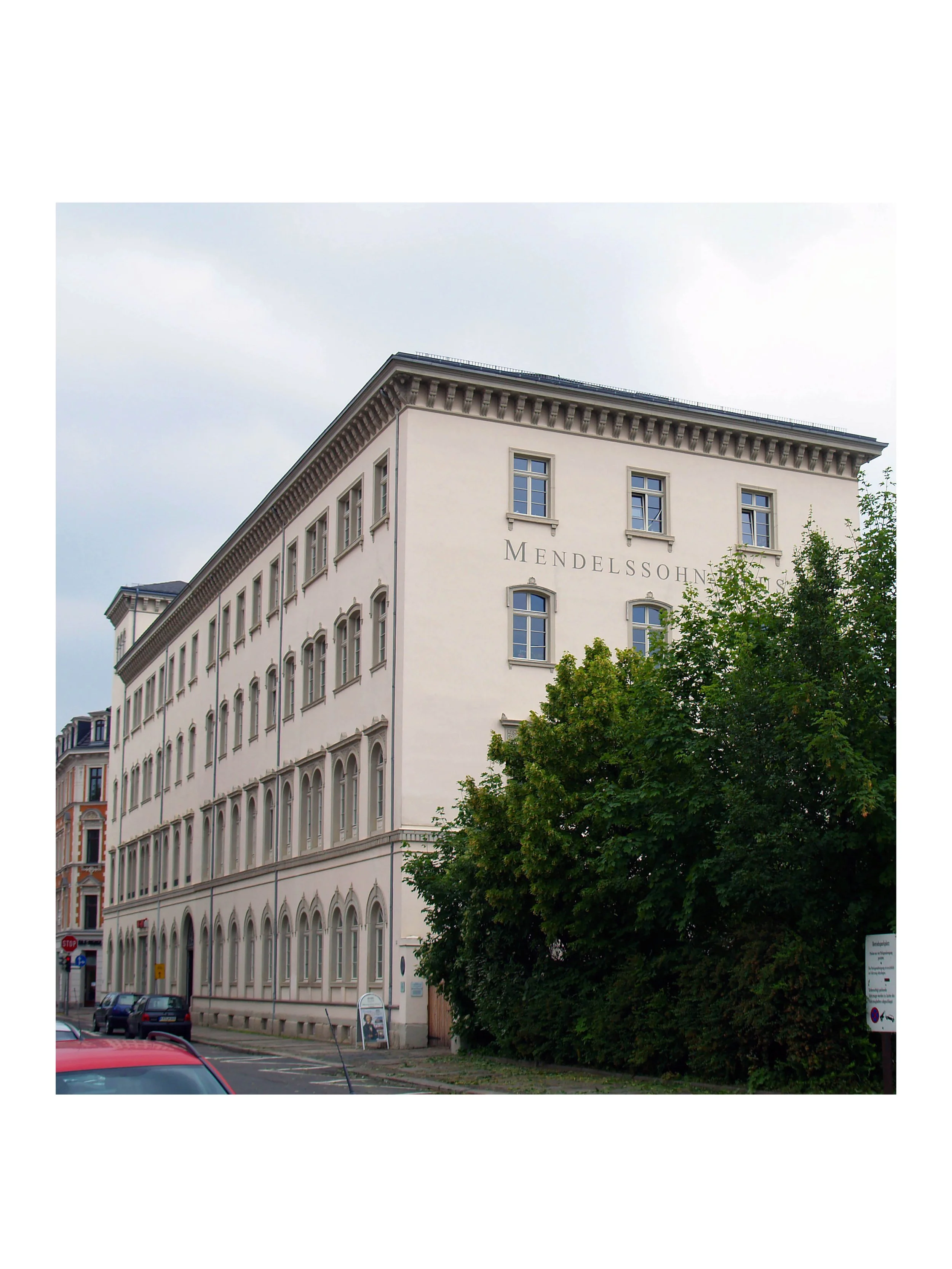
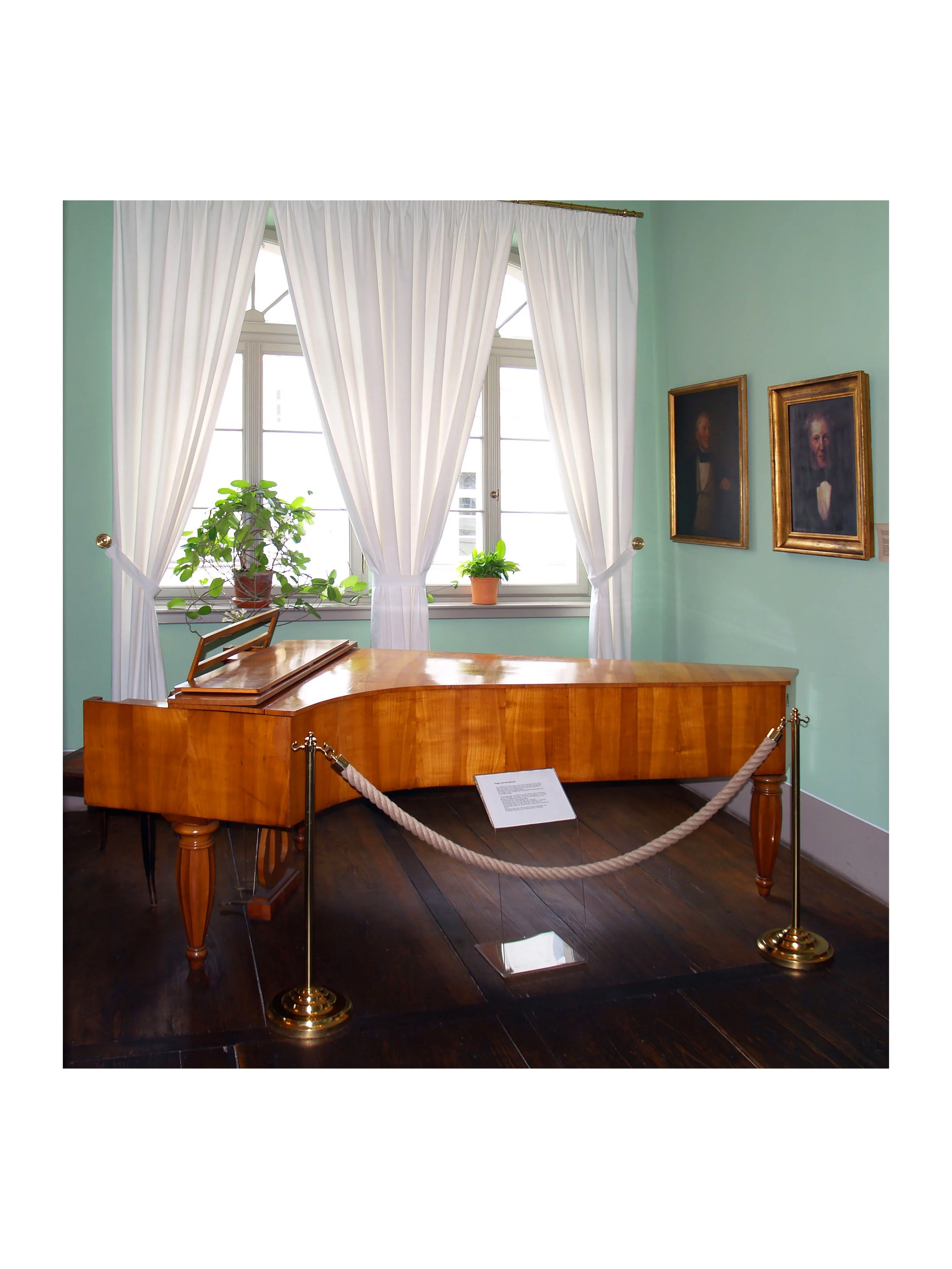
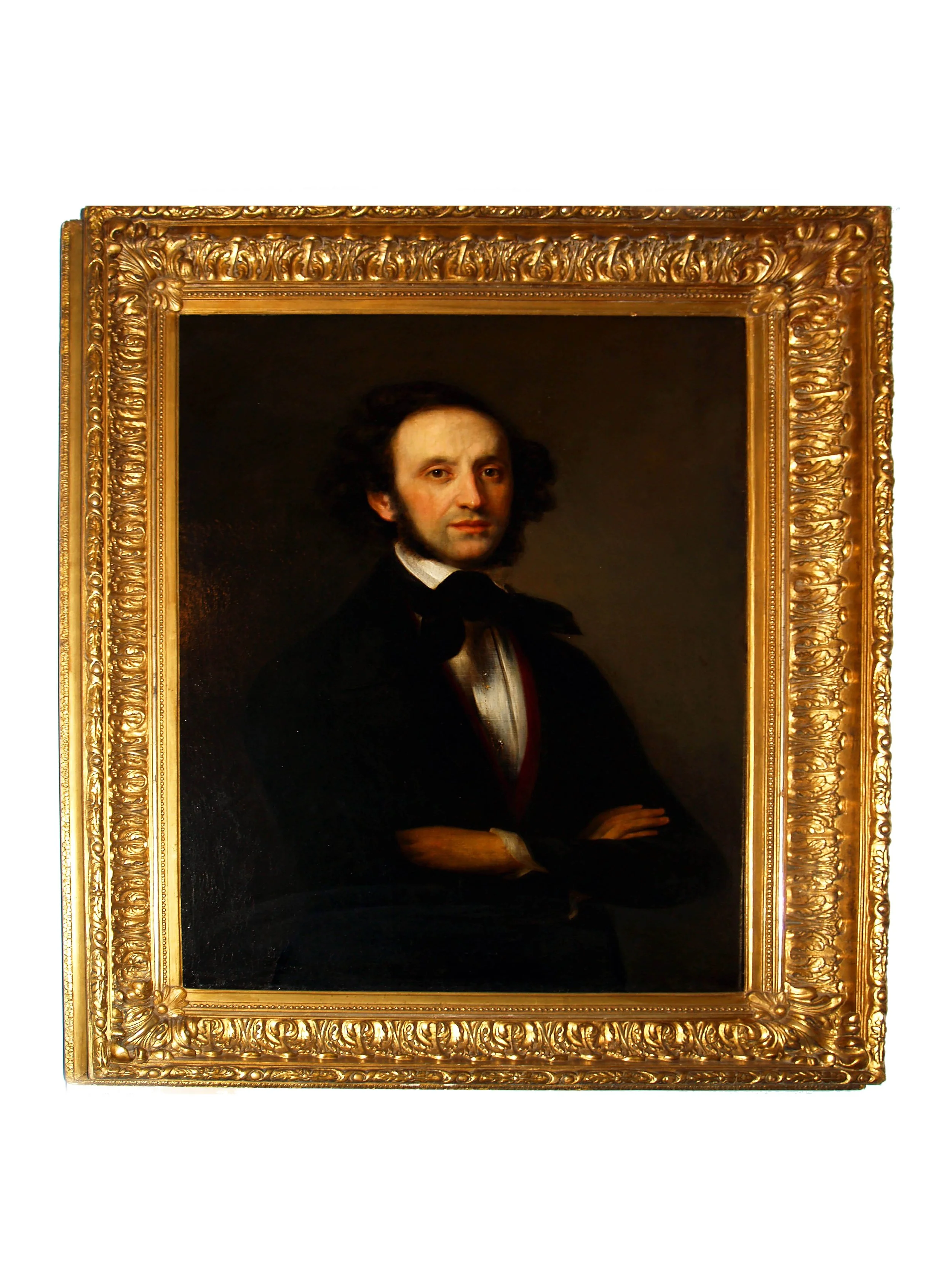
All photos courtesy Mark A. Craig, from the Mendelssohn-Haus Museum, Leipzig, Germany
passion for Mendelssohn
As an avid traveler and musician, I make it a point to visit as many composers’ museums, monuments, historic concert halls, and birthplaces as possible. This was especially true when I was stationed in Germany for five years with the United States Air Forces in Europe (USAFE) Band. Pictured above are a few photos I took on my visit to Leipzig one summer. Knowing this city had a strong connection to both Bach and Mendelssohn made this an obvious choice for a visit. My former music history professor at Southern Methodist University in Dallas, TX, Dr. Carol Reynolds, was staying in Weimar that summer with her family, so I visited them and spent a wonderful weekend enjoying Saxony. We decided to do a day trip to Leipzig. We visited the Stasi Museum, a fascinating place that delved into the world of East Germany's secret police; we wandered through old town with its historic sites, including the famous Thomanerkirche, Bach’s church; and we enjoyed the many football (soccer) revelers’ delight at being in a World Cup host city that summer. We even stumbled upon a parade in Old Town celebrating the upcoming France vs. Korea World Cup match.
We then visited the Mendelssohn-Haus together. It is an amazing experience to see a historic musical site such as this with a musical expert. Just as European travel expert Rick Steves states that seeing a new location is much more meaningful when you have a local guide with you to enhance the experience and share their culture with you, it was also helpful to have a music historian well-versed in Mendelssohn to point out items of interest in the Mendelssohn-Haus and explain their importance (if I did not already know it—debatable). Here we saw original manuscript scores by Mendelssohn and his sister, Fanny; some of Mendelssohn’s beautiful, framed watercolors (he was an excellent artist); and text panels about his time in Leipzig, where, as a new music director, he revolutionized the Gewandhausorchester. It was fascinating.
Touring this amazing museum, seeing the portrait painted of him the year before he died, while still in his prime, and seeing his piano close-up, in situ, changes the way you think about this composer. This experience offers the visitor a glimpse into Mendelssohn’s world, what his daily life might have been like, and where he composed some of his most famous works. Additionally, walking around his neighborhood and visiting prominent sites in the city helps the visitor truly understand this remarkable composer. Experiencing the Mendelssohn Museum with Dr. Reynolds was a real treat! This type of meaningful travel makes you a more well-rounded, experienced musician by deepening your understanding of composers’ lives, experiences, inspirations, and, of course, music.
music trivia questions
First question: Which Mozart symphony inspired the 13-year-old Felix Mendelssohn to write his Streichersinfonie Nr. 8?
Wolfgang Amadeus Mozart’s 41st Symphony “Jupiter” inspired Mendelssohn to write his Streichersinfonie Nr. 8, as a homework assignment from his composition instructor, Karl Friedrich Zelter, in November 1822. This teacher was well-versed in the classics; therefore, you can hear the influence of Bach, Haydn, and Mozart in Mendelssohn’s work. In particular, it was the finale of this “Jupiter“ symphony that inspired the young Mendelssohn to write that delightful string sinfonia, which he completed in just three weeks.
Todd, R. L. (2003). Chapter 3: The Second Mozart. In Mendelssohn: A Life in Music (pp. 106–108). Oxford University Press.
Second question: What was Mendelssohn’s nickname in his early life?
Mendelssohn’s nickname was “The Second Mozart,” given to him by legendary German author Johann Wolfgang von Goethe and later by the German poet, author, and librettist Heinrich Heine. Although he didn’t start composing until age 10, he was quite prolific in his early years, like Mozart, writing 12 string sinfonias, seven chamber works, including the Octet in E-flat major, five keyboard works, a full symphony, and the overture to A Midsummer Night’s Dream before the age of 18.
Todd, R. L. (2003). Chapter 3: The Second Mozart. In Mendelssohn: A Life in Music (pp. 79–108). Oxford University Press.
Third question: Did Mendelssohn create any arrangements or other works based on Streichersinfonie Nr. 8 or its thematic material?
Yes. Mendelssohn re-arranged Streichersinfonie Nr. 8 for full orchestra, rescoring it for full strings, plus two flutes, two oboes, two clarinets, two bassoons, two horns, two trumpets, and timpani, in December 1822, just days after he composed this original work. The twelve string sinfonias Mendelssohn wrote were regularly featured in Sunday Musicales, private concerts hosted at the Mendelssohn home in Berlin for distinguished guests, including conductors, fellow musicians, and academics. Interestingly, his string sinfonias were not published until the 1960s, when they were included in Breitkopf and Härtel’s Leipzig Edition of the Works of Felix Mendelssohn Bartholdy, a definitive Urtext edition of his complete works. However, since that time, the string sinfonias have enjoyed greater popularity, particularly in recordings.
Seaton, D. (2001). Chapter 7: The Orchestral Music. In The Mendelssohn Companion (pp. 396–404). Greenwood Press.
Thanks for taking the time to stop by and read my blog. I hope you enjoyed my musings on music. I’ll be back in two weeks with more anecdotes, memories, and passions for music, including a tribute to Black History Month. In the meantime, you can listen to my new arrangement of Mendelssohn’s “Adagio-Allegro” from Streichersinfonie Nr. 8 by clicking on the MP3 player below. Then click here to purchase it from my Shop. If you haven’t yet spoken up, tell me about your experiences with Mendelssohn in the comments below. I’d love to hear about it. Thanks for stopping by. See you in my next blog!
6 February 2026

Mendelssohn: Adagio-Allegro, mvmt I from Streichersinfonie Nr. 8 - Arranged for clarinet quartet - cover art
